Tag Archive | "financial aid"

207 views

Tags: , , , , , , , , , , ,

Opinion: Educators overlook an achievement gap


By Nick Palm
STAFF WRITER

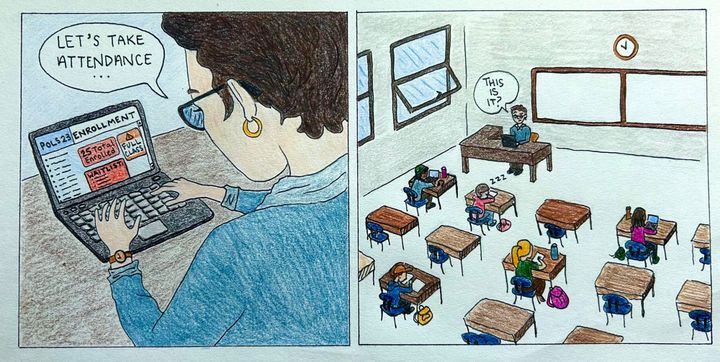
Education in the United States is in jeopardy. It’s a big enough issue that students are missing out on a higher education because of their ethnicity, income level, gender or sexual orientation. But one more disadvantage has been added to the list—their parents never went to college.

On April 30, City College’s board of trustees unanimously passed a measure to ensure equal opportunity and treatment for all students by eliminating ethnic achievement gaps.

Under the new resolution, the college will now collect data from all students including ethnicity, gender, sexual orientation, age, immigrant status, language and ability in order to pinpoint which areas need the most support. Annual data will be compiled and reported by the chancellor. That report will then be used to evaluate, assess and make new policies, which will eliminate any imbalance in City College’s learning environment.

The problem goes much deeper than the same ethnic equality issues America has been dealing with for centuries: It goes deeper than black and white. We are dealing with a class equality issue. Poor and disadvantaged people are struggling to go to college.

According to the National Center for Educational Statistics, the rate of college enrollment has risen for high-income students each year since 1972. The children of economic dynasties are attending college more than ever before, while the low-income families are staying away from post-secondary education.

Among 1992 high school graduates whose parents had not gone to college, 59 percent had enrolled in some form of higher education by 1994. This rate increased to 75 percent among those whose parents had some college experience, and 93 percent among those who had at least one parent with a bachelor’s degree, according to “First Generation College Students: A Literary Review.”

The United States government has set up Gaining Early Awareness for Undergraduate Programs and TRIO, two programs to make it possible for first generation college students to succeed. GEAR UP supplies grants to low income students who want to succeed in a post-secondary education. TRIO — named for three programs that originated in the 1960sare six outreach and support services intended to motivate and support youth from disadvantaged backgrounds toward going to college.

Since its inception in 1998, the GEAR UP program guided over 215,000 low-income students and helped disadvantaged California middle school students to raise their learning curve to the state-mandated level through grants to their schools. Currently, almost 1 million American students are receiving funding through the TRIO programs. The Council for Opportunity in Education states two-thirds of TRIO recipients must come from families whose parents have not graduated from college and have incomes under $33,000.

The Board of Trustees plans to begin working closer with the San Francisco Unified School District in the future. The Board wants to ensure the school district is doing all it can to prepare students for college — not only to achieve while attending but to eventually graduate.

Considering City College serves 23 to 30 percent of the students graduating from San Francisco high schools, this interdistrict cooperation should have started a long time ago. Students must be informed of resources like the TRIO programs, which can help many San Francisco youth become first generation college students. Every high school senior should be required to fill out the Free Application for Federal Student Aid.

Currently the SFUSD has the right idea, but getting students ready for college is only part of the solution. Because parents are such a major influence in their children’s lives, they must be trained to give support and motivation, and to teach them the importance of getting a post-secondary education.

The First Five California program has been teaching parents the importance of brain development during the first five years of a child’s life. Although this is undoubtedly a crucial time for children to learn, it must continue after age five. A child must be challenged by parents, teachers and peers alike to succeed throughout adolescence and into adulthood, both academically and personally.

Educating parents to encourage their children to succeed will show results by the time that child is in high school and ready to make an important decision about the future of their education.

It’s a well known fact that the American education system needs a lot of work.  But I am pleased that City College has promised to make an honest attempt to change the trend.

Posted in Opinions & EditorialsComments (0)

198 views

Tags: , , , , , , ,

Opinion: Federal student aid law sends a poor message


CAILIE SKELTON / THE GUARDSMAN

CAILIE SKELTON / THE GUARDSMAN


By Liska Koenig
CHIEF COPY EDITOR

U.S. Congressman Mark Souder might live in Indiana, but the affects of his politics are felt right here at City College. In 1998 Souder wrote an amendment to the Higher Education Act of 1965, the Drug-Free Student Loan Amendment, which was passed by Congress and is still valid today.

The so-called “Souder Law” indicates that anyone convicted of possession or sale of illegal drugs while receiving federal student aid, grants, loans or work-study will automatically lose these benefits.

Under the Drug-Free Student Loan Law, students convicted of illegal drug possession have their student aid eligibility suspended for one year. For a drug dealing conviction, a student’s eligibility is suspended for two years. After the specified period of time has elapsed (e.g., one year), students automatically regain eligibility for aid. If they have multiple drug dealing convictions or more than two possession convictions, however, their eligibility may be suspended indefinitely.

“A student dealing or using drugs in college probably isn’t making the most of his or her education, and the American taxpayer shouldn’t be required to fund such illicit behavior,” Souder writes on his Web site.
Until 2006, the law affected any student who had a previous drug-related conviction. Pressure from education advocates forced Congress to change it in 2006. Now most students who were convicted before attending college can move on with their lives and get an education.Going to college is the most important change a person can make to turn their life around. It takes courage, strength and determination.

For many people, it also means having less time available to work. Many students trade in their full-time jobs for full-time class schedules and must rely completely on outside sources for financial support.

Without government financial assistance, however, it may be impossible to turn the dream of a better future into reality.

To receive a full grant, students have to take 12 units or more. Being a successful full-time student also requires self-discipline and a clear mind. It certainly doesn’t leave much time to party or do drugs. Instead, it demands a complete change of lifestyle: Go to bed early, keep up with your homework, study, read your textbooks instead of watching television, etc.

The amount of money supplied by the government isn’t enough to live a life of leisure or focus on drugs instead of school. Many City College students feel the need to supplement their government aid with a part-time job that fits their busy college schedule.

Kicking a drug addiction is very difficult, most likely the hardest thing some people will ever do. Wouldn’t it make more sense to give them something to hold on to and to reward their attempt at getting an education? For many drug dealers, the lifestyle is hard to leave behind. However, going to college is the first step towards finding a job that will enable them to make a living. Should we really remove that stepping stone?

Students who get caught selling or using illegal substances become ineligible for federal student aid. Without any regular income to rely on, life often takes a rapid turn, and many of them are left with no other choice than to drop out of college and go back to their old habits.

These people have already been convicted and paid their dues to society for the crimes they have committed. Suspending their financial aid is punishing them twice for the same deed.

What makes the Souder Law even more unfair is that it focuses exclusively on drug-related charges. Crimes like credit card fraud or driving while intoxicated don’t carry the same punishment — these students still get to pick up their financial aid check from the government.

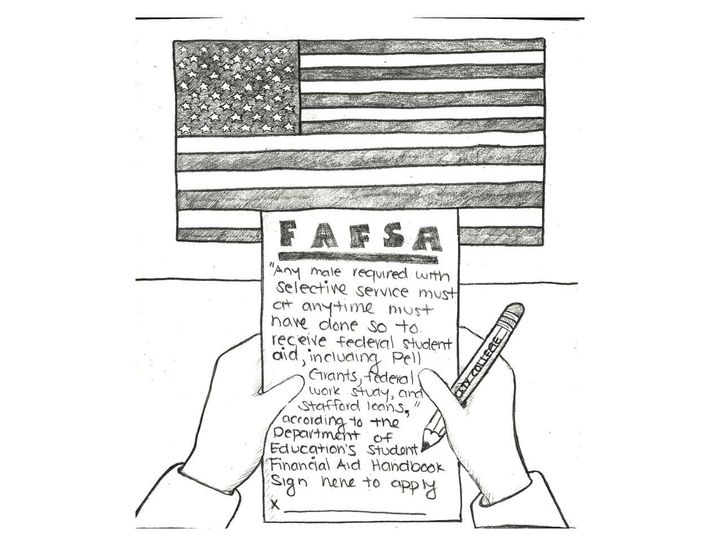
Nobody enjoys the lengthy, complicated process of filling out the Free Application for Federal Student Aid, but many City College students depend on that money for their survival. It can’t be in the best interest of our society to punish those who are already poor and struggling.

With the California budget situation resulting in huge cuts to the education system, the poor and struggling who are attending college are becoming an endangered species. By denying them financial aid, they have absolutely no access to education and are effectively denied the way to a better life.

People make mistakes, but they also deserve a chance to correct them. Their lives shouldn’t be made more difficult by laws like the one written by Senator Souder.

The government’s war on drugs cannot be won by beating down on those who are willing to make a change.

Posted in Opinions & EditorialsComments (0)

549 views

Tags: , , , ,

Financial Aid and EOPS at risk for possible cuts


BY KAREN KINNEY

Contributing Writer

Unless California lawmakers can agree on a state budget already two months overdue, disbursements of over $600,000 for Financial Aid and state funded programs like EOPS will not be available for City College students this September.

Governor Arnold Schwarzenegger and the state legislators are currently deadlocked over a decision to approve a budget for the state of California. The legislator has drafted a budget that proposes no costs to community colleges, while the Governor says a $450 million shortfall needs to be addressed with fewer student services and fewer courses offered. The Governor’s budget proposal includes a three-year increase in the state sales tax by 1 cent per dollar as well as additional cuts and limits on spending that would allow the state to save money.

Those plans, which the governor had revealed to legislative leaders during a private meeting Aug. 3, so far have failed to win endorsements from lawmakers.

EOPS receives money from Cal Grants and according to Jorge Bell, Dean of Financial Aid, there are approximately 13,000 students enrolled in the program with another 5 to 6 percent still planning to apply this semester.
“My main concern with the state budget not getting signed is without the disbursements of the Cal Grant funds, many students will carry a heavy financial burden going into the 2007-2008 school year.” said Bell.

Bell also said that some proposed cuts include reducing supplies and the amount of money for book vouchers.

“With a big demand for services and more needy students, hopefully the district can help pick up the slack.” said Bell.

The truth is, until the budget is signed, City College does not have a definitive answer on what programs will have cuts or by how much. In addition, if the budget is not settled by the middle of September, the college will need to borrow from the state or county treasury to meet its payroll.

According to Vice Chancellor of Finance and Administration Peter Goldstein, City College feels prepared to deal with potential pending disbursements of Financial Aid and face any questions in the future.

“We took a cautious approach and tried to start our fiscal year in a conservative way.” said Goldstein. “We have developed a conservative set of assumptions if the Governor’s version of the budget comes through that would protect the college.”

Both Bell and Goldstein are urging students and voters to call local government and insist lawmakers assign a budget and share how this budget standstill will affect their lives.

Posted in NewsComments (0)

330 views

Tags: , ,

Opinion: Money for nothing


BY ELLEN SILK
EDITOR

The economic crunch has finally hit City College. As we are all dealing with having to find alternatives to fund our college careers, The Guardsman has come across some extra money sources that students can explore.

Everyone should be applying for as many scholarships as possible. According to Jorge Bell, dean of financial aid, EOPS and CalWORKs, many scholarships go unused, leading to less money or less scholarships offered.

The Del M. Anderson Scholarship is offered to students that have completed a minimum 24 units at a GPA of 2.5 or higher, currently enrolled in at least six units and work a minimum of 12 hours a week. This is one of many that can be found in the scholarship listings on City College’s financial aid website.

Recently, President George W. Bush signed legislation that increased the Perkins loan and made it easier to get and to pay back. Loans are still money that will have to be repaid; however, student loans usually have low rates and are deferred till you are out of school.

Another way go to school and make money is to apply for paid internships. Just searching Craigslist you can find a range of companies from galleries to PC gaming magazines to nonprofits that are offering internships. Doing an internship and getting paid for it fulfills requirements for school and helps out in your wallet.

The reality is most of us have to work while going to school, sometimes full time, and every little penny helps.

Posted in Opinions & EditorialsComments (0)

  • Popular
  • Latest
  • Comments
  • Tags
  • Subscribe
Advertise Here

Print Edition

Archives

The Guardsman Twitter Feed

Switch to our mobile site