City College Professor Featured at Studio 8 Film Festival
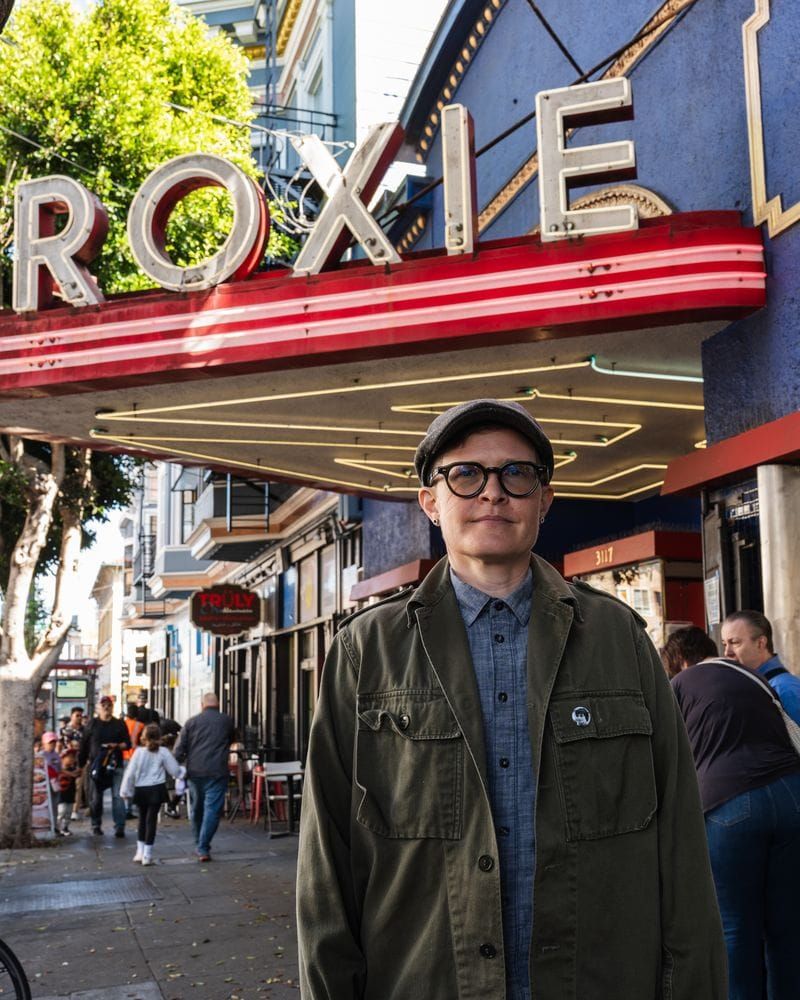
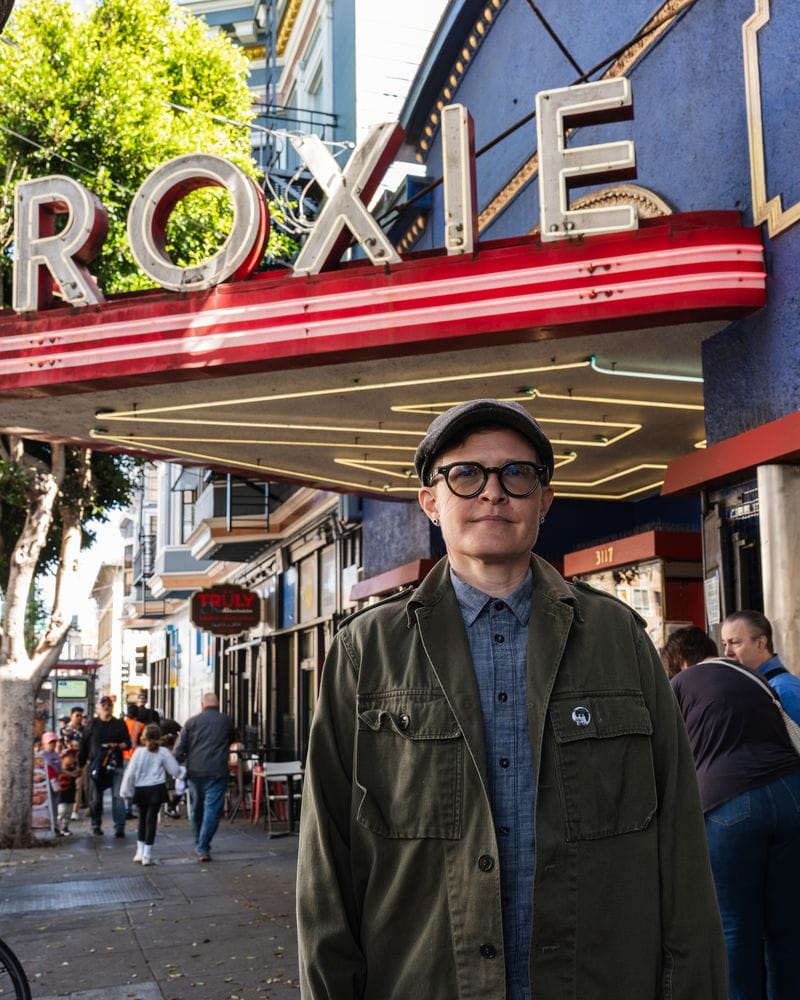
The Studio 8 Film Festival returned to San Francisco’s Roxie Theater, showcasing experimental works by SFAI alumni and faculty, including City College cinema professor Denah Johnston’s short film Flux—a dreamlike exploration of process and spontaneity in filmmaking.
By Karla Lopes
On a warm Saturday afternoon, while the city buzzed outside, a crowd of more than 60 film lovers quieted their chatter and gathered within San Francisco’s Roxie Theater.
It was Sept. 20, the second day of the Studio 8 Film Festival. The three-program celebration featured works by San Francisco Art Institute alumni and faculty, including filmmaker and City College cinema professor Denah Johnston.
The festival aimed to spotlight SFAI alumni and welcomed several for a post-screening Q&A. However, attendance fell short compared to last year's Kuchar Brothers tribute at the same venue. “That was a little disappointing," said festival organizer Maria Theresa Barbist. “We hope to do more outreach to schools in the future.”
With a three-hour duration, the exhibition’s second day displayed a jury open-call selection of short experimental films, dissected into three programs. The first segment featured the works of the open call jurors, Deborah Fort, Toney Merritt and Christopher Coppola. Program two honored the life and work of the Swedish filmmaker and late SFAI faculty member Gunvor Nelson, who died earlier this year. Finally, the third program featured the open call selected films submitted by SFAI alumni and former faculty, including Johnston’s experimental film, Flux (2003).
The audience was immersed in a rich sensorial journey, with an interesting and compelling audio-visual experience that varied in media, techniques, and themes, as a true celebration of independent filmmaking.
Directed by John Muse and Brendamaris Rodríguez, Giroscopio (2021), the contest winner, explored sensory disorientation through the movement of bodies and objects spinning. Made during the COVID-19 lockdown, the film reflects a world in disoriented motion.
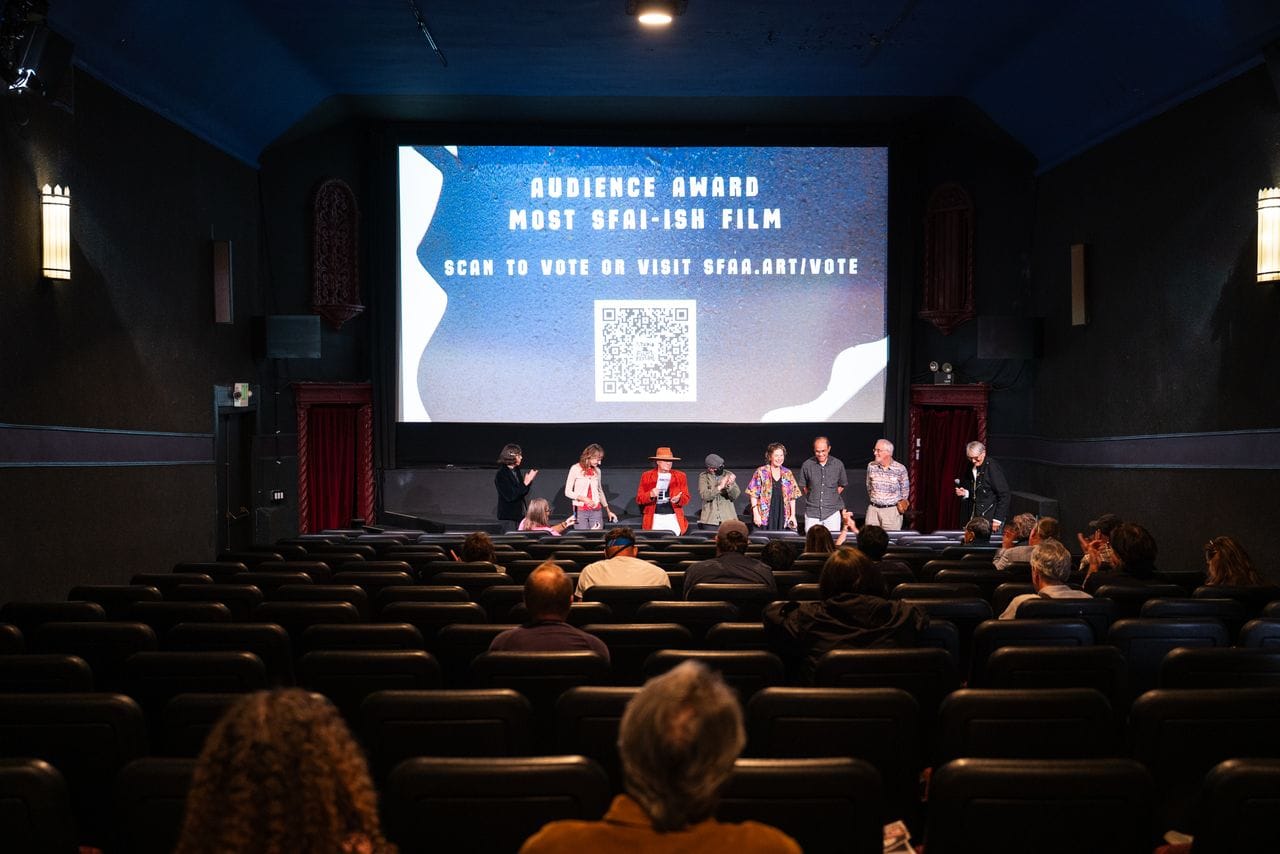
“My experience was really nice, I feel like it was really relaxing to see all the different stories,” said attendee Strawberry Corey, 30. Corey also highlighted the diversity of audiovisual experiences: “What stood out to me was all the different visuals; I could tell the different cameras they used.”
Flux (2003) is a six-minute, black-and-white short film, shot in 16mm, that brought intriguing cinematic elements to the crowd. Without dialogues, the film features a woman wearing a polka dot dress wandering, and at some moment sleeping, on a rooftop. The sounds of heartbeat pulses and wind-blown chimes, along with visuals marked by whiteouts, create a dreamlike imagery.
“The process of making Flux was not a linear thing,” said Johnston, “I think I was more interested in seeing what would happen.” At the time, Johnston was working primarily with found footage, remixing and remaking films, so Flux marked a departure from that approach. With its experimental form and non-linear structure, the making of Flux was, as Johnston put it, “very organic and spontaneous.”
Flux took Johnston on a journey of taking creative risks by putting the film inside buckets with chemicals, like stirring spaghetti, which can create unpredictable visual effects, such as the whiteouts that give the short its dream-like imagery. That said, the creation of Flux was more focused on the process than on its original intention. “It is about the journey, not the destination.” Johnston highlighted.
Since joining City College in 2015, Johnston has found little time to work on personal creative projects. “I was only able to produce new work during my sabbatical in 2023.” Johnston still plans to finish some projects from that sabbatical and believes that instructors should keep creating, giving students a chance to experience the process firsthand, and be inspired by it.
Overall, the Festival showcased original and creative works from local independent artists, and, in Johnston’s opinion, this is “truly valuable” because it demonstrates how accessible experimental filmmaking can be, encouraging others to try it.