
The Double Shift: Juggling Jobs and Classes in College
Students work full-time during work and school hours. CCSF has options to help balance that.

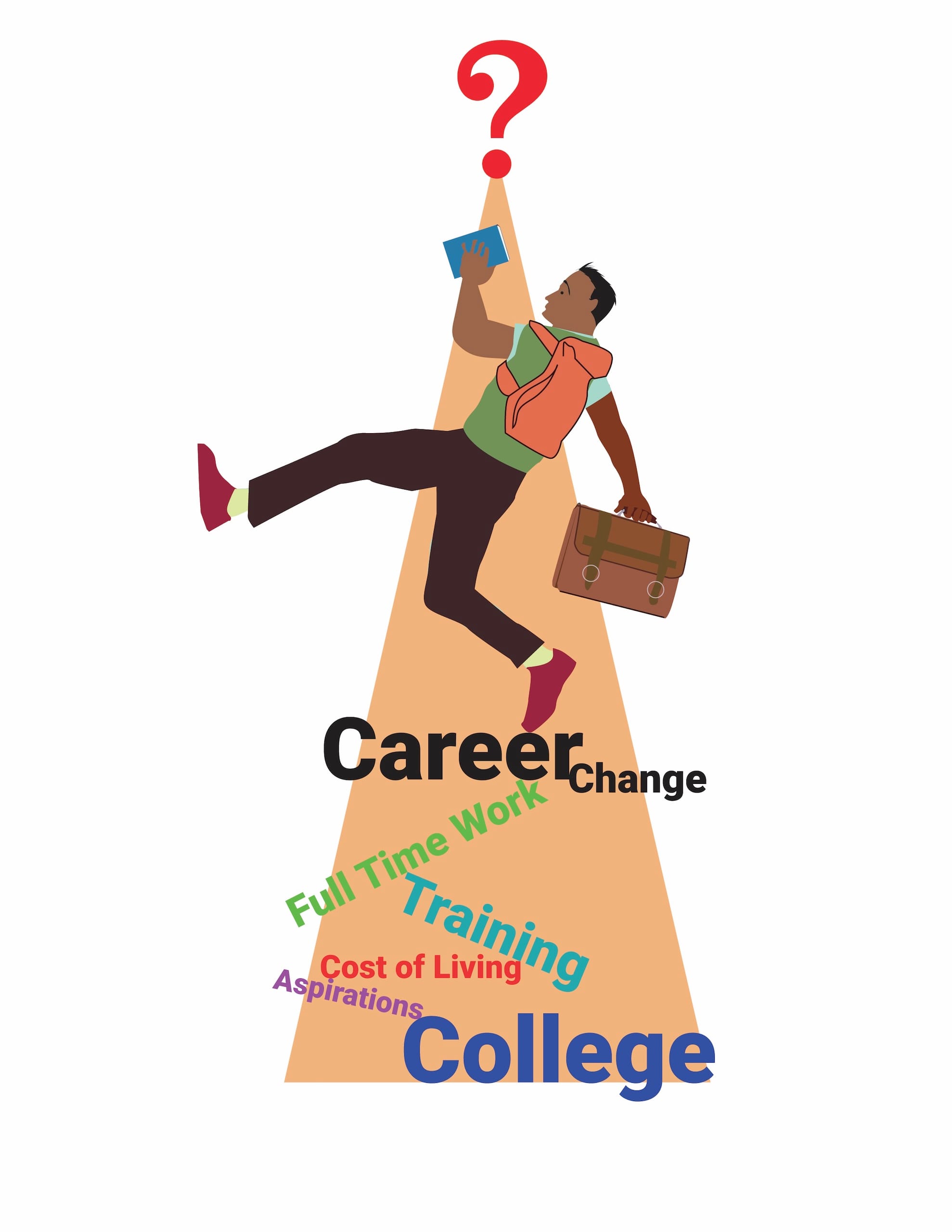
By Raeghan Green
Nearly 80% of college students work while enrolled in classes, according to the U.S. Bureau of Labor Statistics. This balancing act pushes many to master time management as they split their days between lecture halls and hustling for paychecks.
“I was working thirty hours a week while finishing my degree,” says 22-year-old City College student Allie Duke. “It was the hardest thing I've ever done.”
In San Francisco, where the cost of living is 65% higher than the national average, many full-time students are forced to either cut back on study hours or reduce their course loads. The impact is visible in classrooms. “I’ve had at least one student a semester drop for work obligations or travel,” says World Languages professor Aaron Avila.
The question is: how much work is too much, and what support exists for students trying to balance both worlds?
At City College, several resources are available. Through the Student Services section on ccsf.edu, students can access financial aid guidance, counseling and retention programs designed to help them stay on track academically while managing outside responsibilities.
The availability of asynchronous online classes also provides flexibility. “Thanks to the internet, students who need to travel can still access homework and tests,” Avila said. The college’s Office of Online Learning and Educational Technology supports students who may not be able to commit to traditional, in-person classes.
OLET offers resources that help students transfer to four-year universities, earn Associate Degrees in Arts and Sciences, and gain certificates and career skills for workplace success. It includes CityOnline and the Educational Technology Center, both of which are part of the Educational Technology Department.
CityOnline enables students to take online classes from San Francisco or anywhere in California, offering a highly regarded transfer program designed to fit around busy lives and work schedules.
The Educational Technology Center offers training and support in educational technology and its applications to City College students. Visit the Canvas Student Support Center for resources that support both credit and non-credit students in their online learning.
Despite these tools, balancing school and work often comes down to personal resilience and determination. “I learned how to prioritize and manage my time, but it definitely helps that I took predominantly online classes,” Duke said. “I would disperse my work throughout the week, completing most of it on my off days and the rest at night. It wasn’t easy, but it taught me skills I’ll use for a long time.”
Students can also benefit from practical tools. A planner — physical or digital — can help keep schedules organized, and free apps like Google Calendar can send alerts for assignments and deadlines. Avoiding procrastination can ease stress, while open communication with professors and employers can help prevent conflicts. “I always attempt to accommodate unexpected absences and work responsibilities,” Avila said.
For many students, the balancing act isn’t easy. But with the right support, strategies and persistence, it can pay off long after graduation.


